
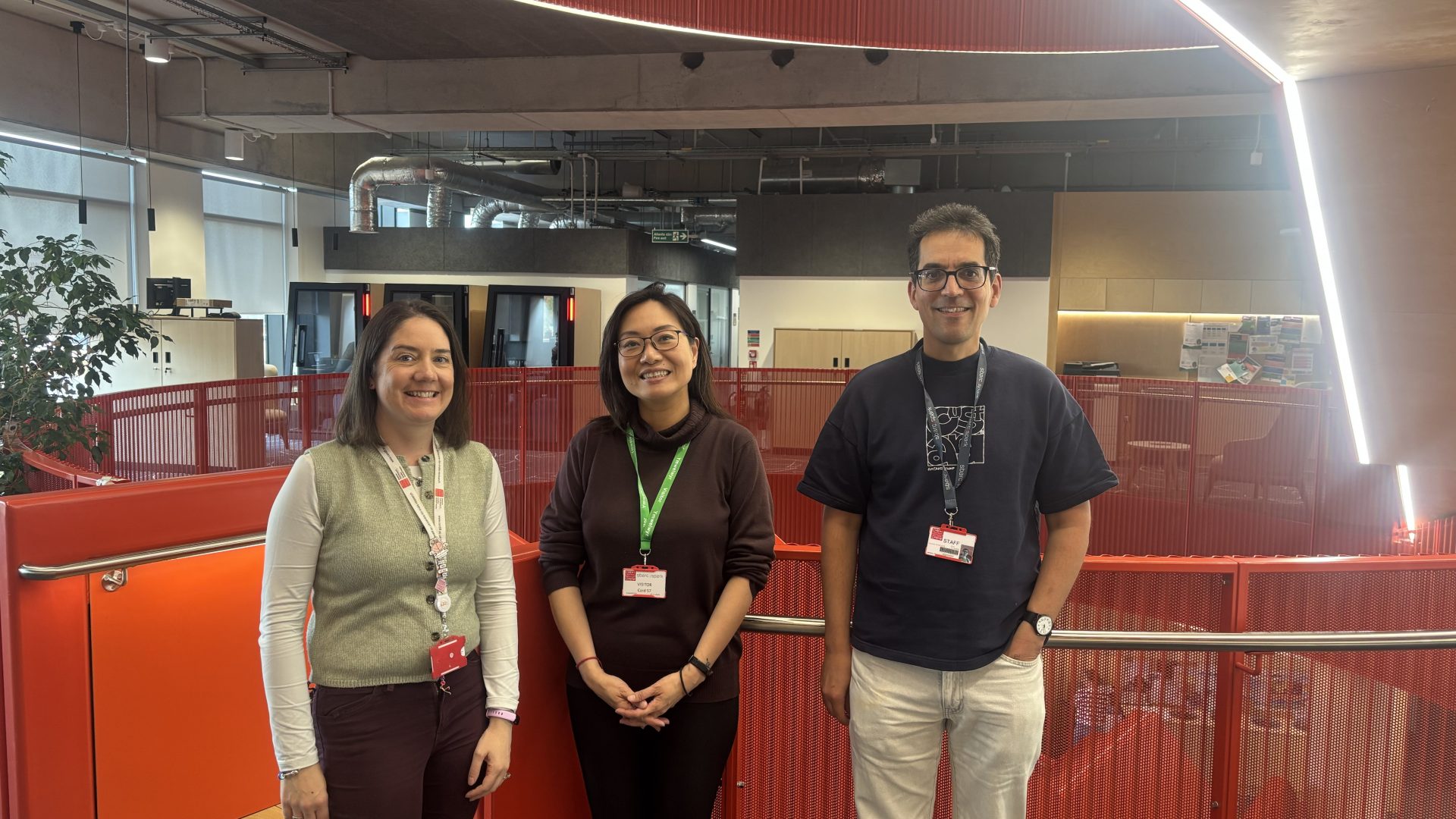
By Dr Kuo-yi Jade Chang, Research Fellow in Health Economics, Centre for Disability Research and Policy, University of Sydney, Australia
Imagine living with a serious mental health condition and, after years of struggle, beginning to rebuild your life. With the right support, you become more confident, reconnect with friends, develop new skills and perhaps start thinking about returning to work.
These are meaningful achievements. They are also signs that support is working.
But what if showing improvement makes you worry about losing the very assistance that helped you get there? What if, instead of celebrating your progress, you feel you must keep demonstrating how severely your condition affects your everyday life to maintain your support?
This raises an important question: How can disability-support systems encourage personal recovery while providing the security people need to sustain it?
Australia’s National Disability Insurance Scheme
Australia began rolling out the National Disability Insurance Scheme (NDIS) in 2013. It provides individualised funding for people with permanent and significant disability to purchase supports that meet their needs and goals.
For people with psychosocial disability – where mental health conditions significantly affect everyday functioning – this might include assistance with daily activities, developing independent living skills or participating in the community.
The NDIS represents an important shift towards individual choice and control. However, to enter the scheme, people must show that their impairment is likely to be permanent and it substantially affects their everyday functioning.
This creates a tension for people with psychosocial disability, whose support needs may fluctuate over time.
Personal recovery does not necessarily mean the disappearance of symptoms. Rather, it means being able to live a meaningful and satisfying life, with or without ongoing mental health challenges.
Someone may become more independent precisely because they are receiving effective support. Yet improvement could lead to reduced funding at their next plan review, or even to questions about whether they still qualify for the scheme.
A system designed to promote independence should not make people fearful of demonstrating their progress.
The missing middle: What happens beyond the NDIS?
The NDIS was never meant to support everyone with disability. It was designed for people with permanent and significant disability – around 780,000 participants today, out of more than five million Australians with disability. Everyone else was meant to be supported by mainstream and community services. But as many of those services were wound back, the NDIS became the main lifeline for many people.
An independent review in 2023 recommended developing a broader system of Foundational Supports to help people with disability who aren’t eligible for the NDIS. For people with psychosocial disability, proposed supports include help navigating services, peer and carer support, assistance with everyday activities, and flexible funding for short-term, recovery-focused support.
The underlying idea is encouraging: people should be able to access different levels of support as their needs change, rather than relying exclusively on an intensive disability-funding programme.
Governments have agreed to build this system, starting with young children with development delay or autism. Foundational Supports for people with psychosocial disability are still being negotiated, and no dedicated funding has yet been committed.
What did people tell us?
In May and June 2025, my colleagues and I at the University of Sydney surveyed 1,625 people across Australia about recent and proposed NDIS reforms. Respondents included people with mental health conditions who were not in the NDIS, NDIS participants, carers, service providers and members of the public.
Among people with mental health challenges outside the NDIS and carers reporting on someone outside the scheme (n = 533), around two-thirds identified areas where support was needed. The most commonly reported needs included accessing healthcare and therapies (38%), getting out of the house and participating in activities (32%), and maintaining relationships with family and friends (31%).
Getting support for recovery was itself a major challenge. Nearly half (45%) reported difficulty affording service fees, 41% did not know what services were available, and 35% found the system difficult to understand.
Awareness of Foundational Supports was low. Among people with mental health conditions outside the NDIS, 82% were not at all aware of them. Among respondents who were aware, views were divided: 38% thought Foundational Supports would improve support for people with disability, while 35% thought they would not.
Some respondents, including NDIS participants, feared being moved to Foundational Supports that did not yet exist or might not provide the assistance they needed. One NDIS participant with psychosocial disability warned:
“I fear that people will be removed from the NDIS and sent to non-existent ‘foundational’ supports.”
These findings reflect people’s experiences and concerns, rather than evidence that such transitions have already occurred. Nevertheless, they highlight a critical issue: people need confidence that appropriate support will remain available as their circumstances change.
Designing a system that supports recovery
A recovery-oriented disability system should recognise people’s strengths, aspirations and achievements, while acknowledging that support needs can fluctuate.
Stepping down from intensive support can be a positive outcome when it reflects a person’s preferences, capabilities and changing needs. But some people we surveyed feared it could become a way of moving people out of the NDIS into systems that are already overstretched, leaving individuals and families to fill the gaps.
A better system would offer continuity between different levels of support, with gradual transitions, coordinated services and clear pathways for increasing assistance again when needed.
Importantly, people should not have to experience another crisis, or repeatedly demonstrate the severity of their difficulties, before they can obtain appropriate help.
We also need to rethink what success looks like.
From a health economist’s perspective, reducing expenditure on disability support is not necessarily a saving if the consequences include increased hospital admissions, housing instability, lost employment or greater demands on unpaid carers.
Equally, continuing intensive support indefinitely is not always necessary or desirable. The challenge is to provide the right support, at the right intensity, at the right time, while preserving people’s choice and security.
This requires research that follows people as they move between different levels of support, examining their wellbeing, independence, social participation, healthcare use and the experiences of families and carers.
Ultimately, successful reform should not be measured simply by how many people leave a disability-support programme or how much expenditure is reduced.
It should be measured by whether people are supported to build meaningful lives, celebrate their progress and remain confident that help will be there when they need it.
Read more:
Chang, K.-y. J., Hollier, J., Smith-Merry, J., Yen, I., & Kim, H. (2025). Beyond the NDIS: Unmet Needs, Foundational Supports and System Reform for Psychosocial Disability. Centre for Disability Research and Policy, University of Sydney.
Chang, K.-y. J., Hollier, J., Kim, H., Yen, I., & Smith-Merry, J. (2026).Recent and proposed changes for the NDIS: What does it mean for people with mental health support needs? Centre for Disability Research and Policy, University of Sydney.
